Which Herbs Are Safe for Cats? Avoid These Mistakes!
Affiliate Disclosure: As an Amazon Associate, diyherbgardener.com earns from qualifying purchases. If you click a link and buy a product on Amazon, I may receive a small commission at no extra cost to you.
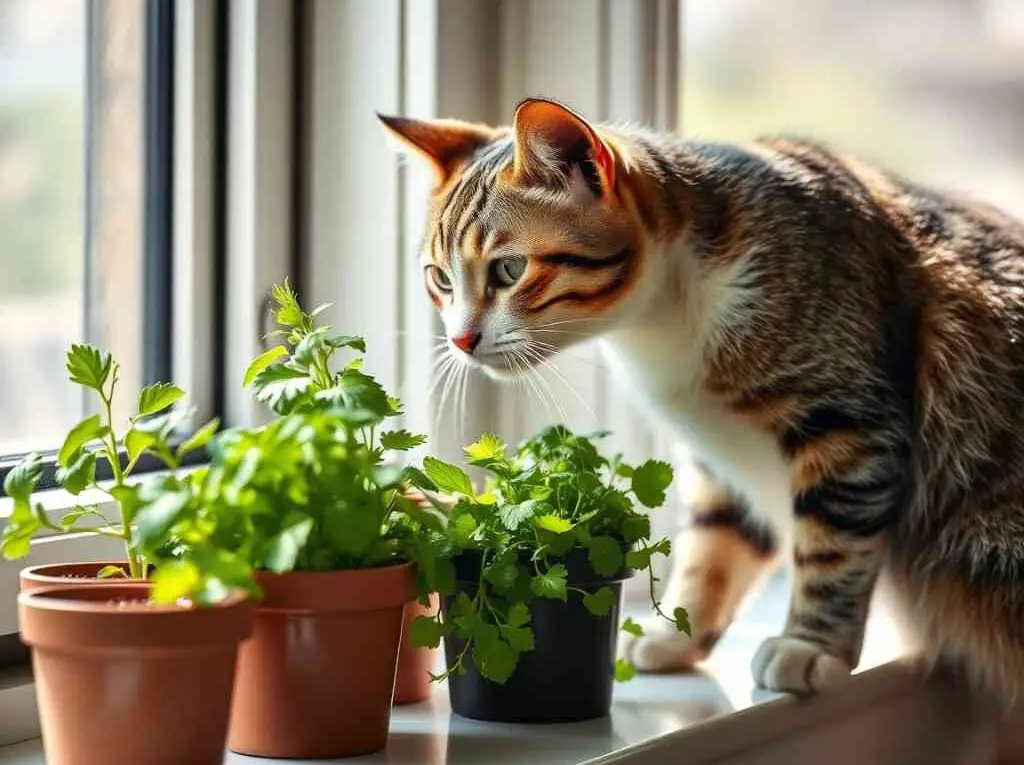
Let us be completely honest with one another: cats are naturally nosy creatures. If you have ever tried to grow a cute little indoor herb garden, you have almost certainly caught your furry roommate sniffing, pawing, or straight-up munching on your fresh basil leaves.
And while it looks entirely innocent on the surface, discovering exactly which herbs are safe for cats is crucial for preventing unexpected medical emergencies. If you have ever frantically searched the internet while watching your feline friend nibble on your kitchen window rosemary plant, you are definitely in the right place.
Real-world safety logs from online veterinary forums reveal that not all common kitchen plants get a safe green light for feline households. Pet owners over on the r/catadvice community boards warn that several everyday culinary staples contain concentrated volatile oils that cause immediate stomach distress or severe liver strain in felines, making proper species identification a strict necessity before you ever buy seeds.
Understanding How Feline Metabolism Interacts with Plant Compounds
To truly understand which plants belong in your home, we must first look at feline biology. Cats process plant compounds and botanical materials very differently than humans and even dogs do. Their livers lack specific enzymes needed to properly break down various essential oils and natural alkaloids.
Ever wonder why cats completely ignore carrots but go wild for catnip? Nature wired their sensory systems in a fascinating and unique way. Before you build a countertop jungle or share your pesto garden with your kitty, you must learn what is safe, what is toxic, and what might turn a casual snack into an expensive veterinary bill.
The Green Light: Fully Safe Herbs for Cats
Let us get the wonderful news out of the way first. There are several fantastic herbs you can safely grow around your cat, and many of them offer genuine health and enrichment benefits. Niche forums widely agree that incorporating these plants provides safe environmental stimulation.
Catnip: The Undisputed King of Feline Herbs
Scientific name: Nepeta cataria. Typical effects include sheer euphoria, wild zoomies, and dramatic flopping.
This plant is absolute royalty in the feline world. Roughly fifty to seventy percent of all cats react intensely to catnip, rolling around in it like they have discovered paradise. It is completely non-toxic and even possesses mild stress-relief properties for high-strung pets.
- Safe for daily or weekly recreational use.
- Helps alleviate mild anxiety and boredom.
- Pro tip: Do not overdo it. Cats can build up a tolerance or simply get bored of it over time.
Cat Grass: The Ultimate Digestive Aid
Includes wheatgrass, oat grass, and barley grass. These plants actively help with digestion and natural hairball control.
Think of this as a specialized kitty salad bar. While cat grass is technically a grain sprout rather than a traditional culinary herb, it is the most common indoor plant grown specifically for pets.
Experienced cat owners on Reddit frequently note that while finding green messes on the living room rug is annoying, this grass successfully helps cats pass hairballs safely.
Valerian Root: Catnip’s Edgier Cousin
Scientific name: Valeriana officinalis. Effects closely mirror catnip but are often much stronger.
Many cats prefer valerian, especially individuals that do not respond genetically to catnip. The root contains the active compounds that drive cats wild. Experienced pet parents note that while the dried root smells strongly to humans, felines are utterly obsessed with it.
Dandelion Greens: The Unsung Nutritional Heroes
Commonly considered stubborn backyard weeds, clean dandelion leaves can act as a gentle digestive aid and offer natural antioxidant benefits for your pets when used with care. While most homeowners frantically yank these plants out of their lawns, the untainted greens are rich in vitamins A, C, and K.
Real-world safety logs from online veterinary forums emphasize that while these greens are non-toxic, they must be used strictly in moderation. You can purchase clean, organic dried leaves online and crumble a small, loose pinch over your cat’s wet food to provide a safe fiber boost.
However, pet owners over on the r/catadvice community boards warn that dandelion greens carry moderate oxalate levels and a natural diuretic effect. This specialized compound can trigger calcium oxalate crystal formation in the bladder or put unnecessary strain on cats with chronic kidney disease.
Always verify that your yard has never been treated with chemical herbicides before picking wild leaves, and check with your family veterinarian before making plant-based toppings a permanent addition to your cat’s dinner bowl.
Parsley: Fresh Breath in Strict Moderation
Always stick exclusively to curly parsley, as flat-leaf varieties contain much higher levels of furanocoumarins. Benefits include acting as a natural breath freshener.
A tiny pinch of curly parsley now and then is completely fine, but never let your cat snack on an entire bush. It remains safe only in very small, controlled doses.
Basil and Thyme: Safe Culinary Additions
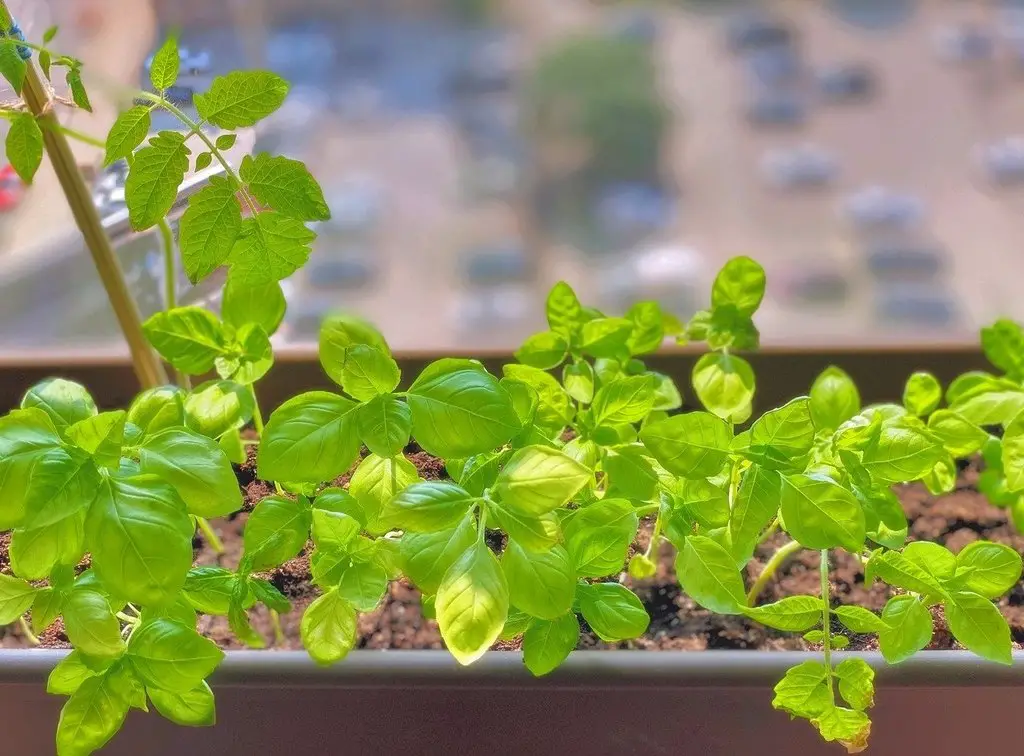
Basil is flavorful and surprisingly safe for casual nibbling. Thyme acts as a natural antibacterial plant when kept in its fresh, non-concentrated form.
If your kitty brushes up against your fresh basil or thyme plants, there is zero need to panic. However, you must always avoid concentrated thyme essential oil, which is heavily toxic to felines.
The Danger Zone: Herbs to Avoid Completely
Now we must address the hazardous flora. These plants might look aesthetic on social media and smell amazing in your kitchen, but they can cause severe health complications for curious cats.
Lavender: A Deceptively Dangerous Beauty
Lavender sounds deeply calming for humans, but it contains linalool and linalyl acetate—both of which are toxic to cats. Fresh lavender plants are risky, but concentrated essential oils in diffusers are downright dangerous. Felines and essential oils are a recipe for an emergency veterinary visit.
Oregano: A Hard No for the Kitchen Counter
Oregano is definitely not safe for pets. Ingesting this herb can severely irritate your cat’s gastrointestinal tract, leading to painful vomiting and persistent diarrhea. That is certainly not the relaxed Italian cooking vibe you want in your home.
Mint Varieties: Peppermint and Spearmint Risks
Cats and mint make a terrible combination. Mint contains natural salicylates, which become toxic to cats when ingested in large quantities. Fortunately, most cats naturally dislike the pungent aroma.
Chives and Garlic: The Allium Family Red Flag
Chives, garlic, onions, and leeks belong to the dangerous allium botanical family. Even tiny amounts can aggressively damage your cat’s red blood cells, ultimately leading to severe, life-threatening anemia. That casual sprinkle of garlic powder on your dinner plate must be kept far away from hungry pets.
Lemongrass: Deceptively Risky
Fresh lemongrass might look harmless in a decorative pot, but it contains citral and geraniol, compounds that are known toxins for felines. Essential oil derivatives are exponentially more concentrated and hazardous.
What about rosemary, sage, or cilantro? These represent the controversial gray area plants that require careful handling.
- Rosemary: Safe in tiny amounts, but most cats dislike the potent scent anyway.
- Sage: Generally fine in microscopic doses, but avoid letting your cat graze freely.
- Cilantro: Usually acceptable, though some sensitive cats may experience mild stomach upset.
If your cat treats any of these gray area plants like an all-you-can-eat buffet, keep them strictly out of reach. Moderation is everything in the animal kingdom.
Smart Strategies for Growing Herbs Around Cats
If you are an avid indoor gardener and a devoted cat lover, you do not have to choose between your hobbies. You can successfully have both if you implement smart environmental barriers.
- Hang decorative planters securely where curious paws can never reach them.
- Utilize sturdy wall-mounted shelving units or high window ledges.
- Grow risky culinary herbs outdoors on a secured patio or balcony.
- Choose non-toxic greenery like cat grass for accessible indoor spots.
When in doubt, always cross-reference new greenery with official veterinary resources. It is infinitely easier to grow safe plants than to explain to an emergency vet why your pet has a stomachache.
Building the Ultimate DIY Cat Herb Garden
If you want to create a fun weekend project, try assembling a dedicated sensory garden for your pet. This keeps them away from your cooking herbs while giving them a dedicated space of their own.
- Secure a wide, heavy-bottomed planter box that will not tip over easily.
- Fill it with organic potting soil and plant fresh catnip.
- Add a patch of sprouting wheat or oat cat grass.
- Include a small root section of valerian and a sprinkle of dried dandelion leaves.
- Place the box near a sunny window and let your cat claim their new throne.
Equipping Your Home with the Best Pet-Safe Gardening Supplies
To set up your indoor botanical sanctuary without risking your pet’s safety, having the right hardware makes all the difference. Investing in heavy-duty hanging planters prevents accidental spills and keeps toxic dirt out of paws’ reach.
For securing your space, a reliable set of heavy-duty floating wall shelves available on Amazon allows you to elevate sensitive plants well above jumping height.
Additionally, keeping a pre-packaged organic cat grass growing kit available on Amazon on hand ensures your feline always has a safe, digestible alternative to chew on when those grazing instincts kick in.
Real Lessons Learned from Plant-Loving Cat Owners
Many owners learn plant safety the hard way through trial and error. The first time I grew fresh oregano on my balcony, I assumed it was just a harmless kitchen seasoning. Within hours, I discovered my cat pawing miserably at her mouth with scattered leaves all over the floor.
A frantic phone call to the animal poison control hotline ensued, and while she fortunately recovered quickly, it served as a permanent wake-up call.
Final Thoughts on Keeping Pets and Plants in Harmony
Knowing which plants are safe transforms you from an anxious pet owner into a confident home gardener. Stick to verified catnip, wheatgrass, valerian, and basil, while permanently avoiding alliums, oregano, and lavender.
Whether your cat happily lounges in their new sensory garden or simply ignores your efforts and knocks your pots over for pure entertainment, you are now fully prepared to handle whatever botanical chaos your furry friend creates.
Disclaimer: The content on diyherbgardener.com is for general educational, gardening, and informational purposes only. While we research crowdsourced data and expert recommendations, information regarding domestic cultivation and feline safety should be verified with a professional veterinarian or an authoritative database like the ASPCA toxic plants list before application.