Best Low Maintenance Herb Pairings That Truly Work Together
Establishing an intentional kitchen garden begins with selecting proven low maintenance herb pairings that thrive under uniform environmental conditions. Grouping botanical companions with shared moisture and sunlight demands cuts daily maintenance down to simple observation.
When companion herbs match biologically, they prevent competitive stress and resist common garden pathogens. This strategic arrangement turns limited backyard beds or windowsill planters into highly resilient growing zones.
Variety Selection and Core Differences
Herbs fall into distinct physiological categories based on their native origins. Mediterranean species like rosemary, sage, oregano, and thyme require arid conditions, while soft-stemmed varieties like chives and flat-leaf parsley demand steady hydration. Combining these differing ecological profiles into a single container invites root rot or severe dehydration.
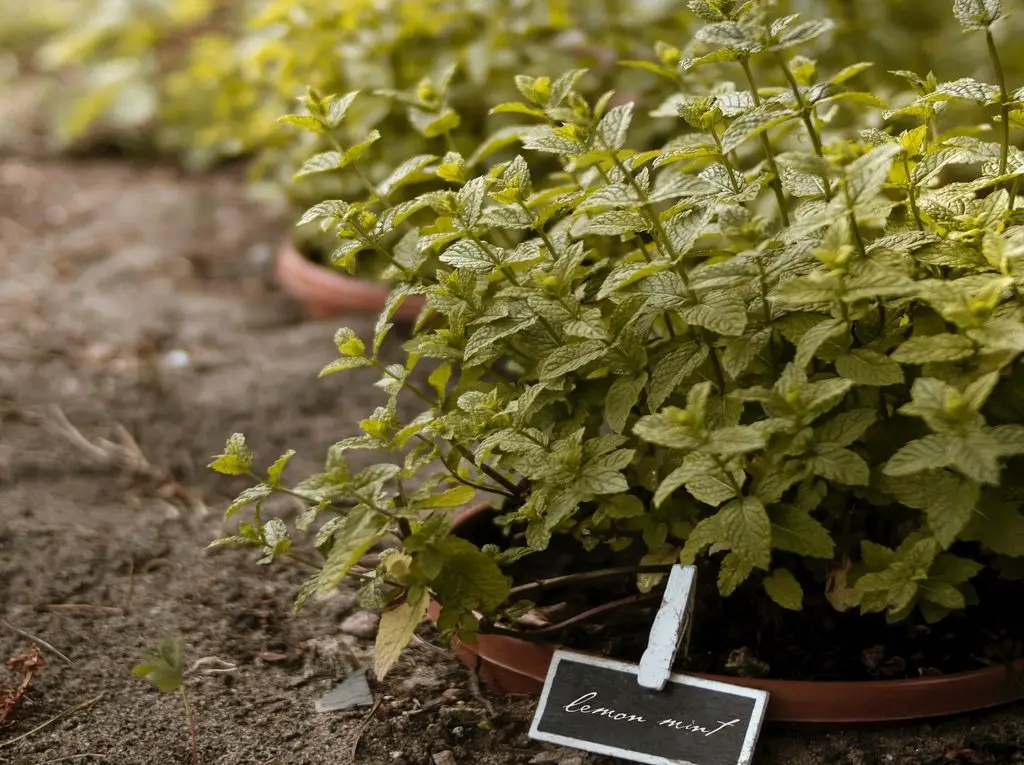
Aggressive spreaders like spearmint and lemon balm present unique pairing hurdles due to creeping rhizomes. A pervasive gardening myth suggests sinking bottomless pots into garden beds to contain them. In reality, rhizomes easily dive beneath open barriers within two seasons, meaning true containment requires a fully intact pot with drainage holes or a solid, deep-sunk root barrier.
Another common misconception involves interplanting members of the Umbelliferae family, such as dill and cilantro. Gardeners often fear that planting them together ruins the current culinary profile. Cross-pollination exclusively impacts the genetic traits and seeds of the next generation crop, leaving the current season leaf flavor, aroma, and genetics completely unaltered.
- Rosemary and sage paired for semi-arid microclimates
- Chives and Italian flat-leaf parsley for moisture-retentive containers
- Thyme and Greek oregano for drought-tolerant living mulch layers
- Dill and cilantro for cool-season, fast-yielding spring beds
Location and Soil Setup
Root success depends entirely on providing the proper structural foundation for your herbs. For container cultivation, you must use a loose, premium soilless potting mix that provides rapid drainage and superior aeration. You must strictly avoid native topsoil or dense garden loam in pots, as these materials compact swiftly and suffocate root hairs.
In-ground installations require a loam-based blueprint where organic amendments never exceed 40 percent of total volume. Exceeding this threshold creates an overly spongy substrate that retains excess moisture and destabilizes soil biology. A reliable soilless potting formula for container pairs includes:
- 50 percent sphagnum peat moss or washed coconut coir
- 30 percent horticultural perlite or coarse pumice
- 20 percent thoroughly screened mature compost
Position your herb groupings where they receive at least six hours of direct sunlight daily. An unorthodox backyard hack is to use prostrate thyme or Greek oregano as living ground cover around upright rosemary stems. This dense foliage buffers the root zone against temperature spikes while reducing soil moisture evaporation.
Spacing and Planting Guidelines
Overcrowding herbs accelerates fungal outbreaks by restricting airflow between stems. Ensure each specimen receives adequate radial clearance so mature branches can expand without shading out neighboring companion roots. Proper planting also hinges on matching seed depths to the physiological needs of each variety.
Never use a blanket sowing depth across different herb seeds. Large seeds like cilantro require a true quarter-inch soil burial to germinate reliably in total darkness. In contrast, small, light-triggered seeds like basil must be surface-sown completely uncovered and lightly pressed into moist substrate to initiate germination.
- Cilantro seeds planted at a true depth of one quarter inch
- Sweet basil seeds surface-sown uncovered for light exposure
- Woody perennial transplants spaced twelve to fourteen inches apart
- Chive and parsley crowns spaced six to eight inches apart
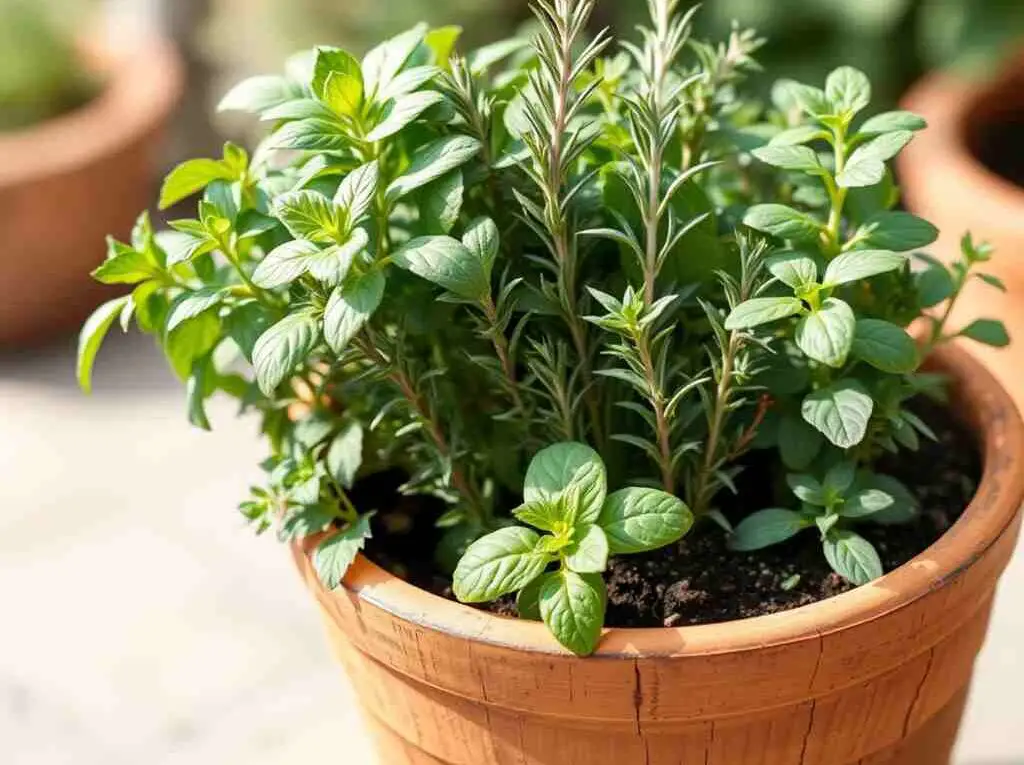
When installing container pairings, arrange taller architectural plants at the rear or center. Position trailing or sprawling varieties along the outer rim so they spill over the container sides without smothering upright stems.
Watering and Nutritional Protocols
Hydration protocols must align with the native physiology of each plant collective. Mediterranean duos prefer the soak-and-dry cycle, requiring complete dry-down of the upper substrate between watering intervals. Soft-stemmed pairs require consistent, moderate moisture to sustain broad, tender leaf expansion.
Excessive fertilization degrades the culinary quality of companion herbs. Pumping woody Mediterranean plants with high-nitrogen fertilizers stimulates rapid, watery vegetative growth that dilutes aromatic monoterpenes and weakens essential oil concentration. Apply low-nitrogen organic inputs sparingly during the peak vegetative window.
- Woody groupings irrigated only when the top two inches feel dry
- Tender-leaf pairings irrigated when the top half-inch loses moisture
- Liquid kelp or balanced organic feed applied at half strength monthly
Harvesting and Storage
Prune culinary herbs continuously to stimulate lateral branching and delay flower formation. Always cut stems just above an active leaf node using sharp, sterilized shears. For indeterminate growers like basil and mint, pinch off terminal flower buds immediately to keep essential oils concentrated in the foliage.
Food safety sanitation is essential before storing any fresh harvest. You must thoroughly wash the fresh harvest under clean running water and dry the leaves completely with a salad spinner or paper towels to eliminate soil-borne bacteria before packing or storing. Residual surface water rapidly promotes bacterial decomposition in refrigerated storage.
To preserve peak aromatic quality, freeze clean, dry leaves directly inside silicone ice trays submerged in extra virgin olive oil. This suspension technique protects delicate terpenes from oxidative browning and cellular rupture. For long-term room-temperature storage, hang bundles upside down in a dark, dry space with high ventilation until leaves crumble crisply under gentle pressure.