Which Herbs Are Invasive? Think Twice Before You Plant These
Understanding which herbs are invasive is the single most important lesson a gardener can master before transforming a backyard plot into a culinary sanctuary. While standard nursery tags routinely celebrate aggressive species for their rapid growth and aromatic foliage, they rarely warn you about the silent underground warfare these plants unleash on your landscape. Planting an aggressive species directly into a shared bed will inevitably crowd out delicate companions, destroy local soil nutrition, and trigger expensive structural yard damage.
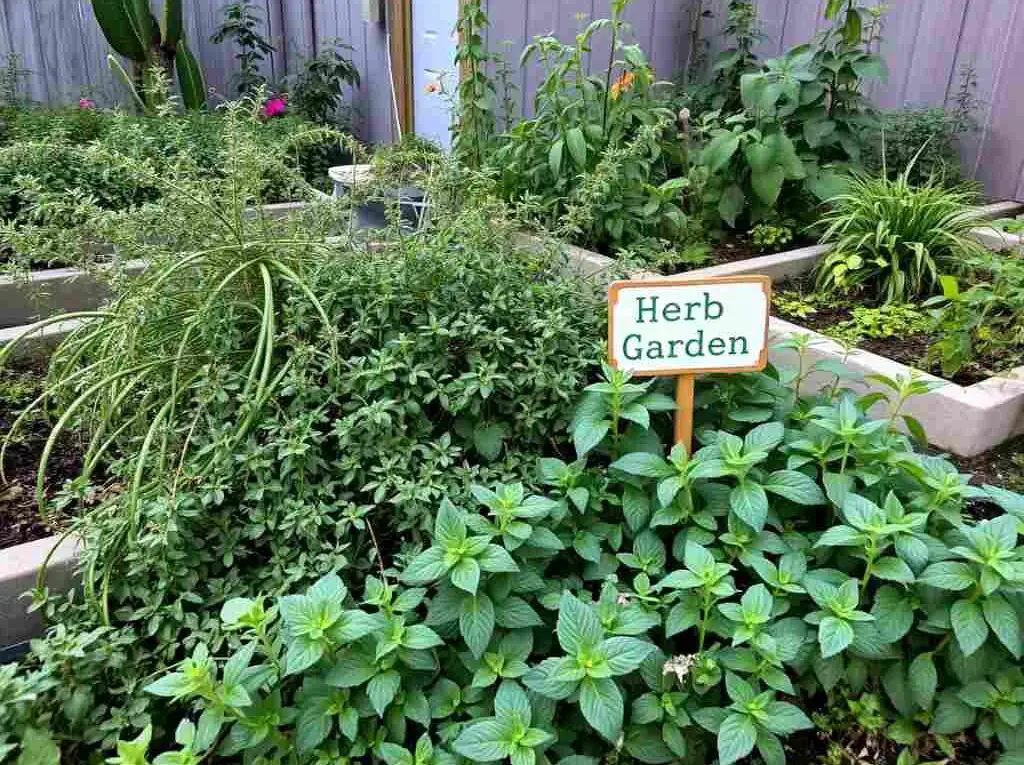
Mapping out your garden with a strict understanding of plant mechanics is crucial for keeping aggressive spreaders entirely contained. This guide details the biological differences between high-risk crops, provides professional isolation blueprints, and highlights expert-vetted harvesting methods to safeguard your garden. By applying these strict horticultural rules, you can enjoy robust aromatic yields without accidentally surrendering your yard to an un-killable plant takeover.
1. Variety Selection and Core Differences
Identifying aggressive botanical traits before you purchase seeds or nursery starts dictates the long-term survival of your garden ecosystem. Aggressive species generally belong to specific plant families—such as the Lamiaceae family—that utilize highly efficient reproductive survival mechanisms. For instance, common spearmint (Mentha spicata) and peppermint (Mentha x piperita) use underground networks to move horizontally through garden beds at an alarming rate. Lemon balm (Melissa officinalis) and certain wild oregano variants present a double threat by spreading through underground channels while simultaneously dropping hundreds of highly viable seeds from their fading summer blooms.
Understanding the difference between mild culinary plants and aggressive colonizers prevents devastating structural layout errors. While sweet marjoram remains a polite, compact clump, its close relative, common Greek oregano, will aggressively push its perimeter outward year after year. Culinary discussions on community homesteading boards frequently warn that lemon balm behaves as a deceptive invader, completely taking over paths and lawn edges within two seasons if left unvetted. You must treat any member of the true mint or balm lineages as a high-risk crop that requires immediate, permanent structural containment.
- True peppermint and spearmint travel via aggressive underground runners.
- Lemon balm and common oregano colonize yards rapidly through self-seeding loops.
- Compact culinary herbs like marjoram or chives do not display invasive spreading traits.
Invasive Herb Containment Matrix
Horticultural containment baselines, reproductive risks, and physical isolation metrics.
| Herb Family | Dispersal Mechanism | Structural Containment Baseline | Why It Saves Your Yard |
|---|---|---|---|
| 🍃 Mints (Mentha) | Rhizomatous Runners |
In-Ground Barrier Depth ≥ 24 Inches
Mints must be planted in fully enclosed containers or contained by continuous solid root-barrier sheets. Bottomless buckets fail as root runners dive vertically.
|
Prevents severe property line infestation by forcing roots into a strict, physical lateral-turn block.
|
| 🍋 Balms (Melissa) | Prolific Self-Seeding |
Prune Flowers Pre-Anthesis
Cut down the entire canopy by half immediately before flowers fully expand to disrupt seed maturity cycles completely. Maintain a 5-foot spatial buffer from tilled beds.
|
Halts airborne colonization vectors before wind currents drop viable seed pods across open topsoil.
|
| 🌿 Oreganos (Origanum) | Trailing Decumbent Stems |
Elevated Hardscape Placement
Grow Greek Oregano variants exclusively on raised brick patios or inside elevated planters where trailing branches cannot touch open soil and self-root.
|
Eliminates node-to-soil contact, stopping low branches from forming separate, independent daughter root nodes.
|
2. Location and Soil Setup
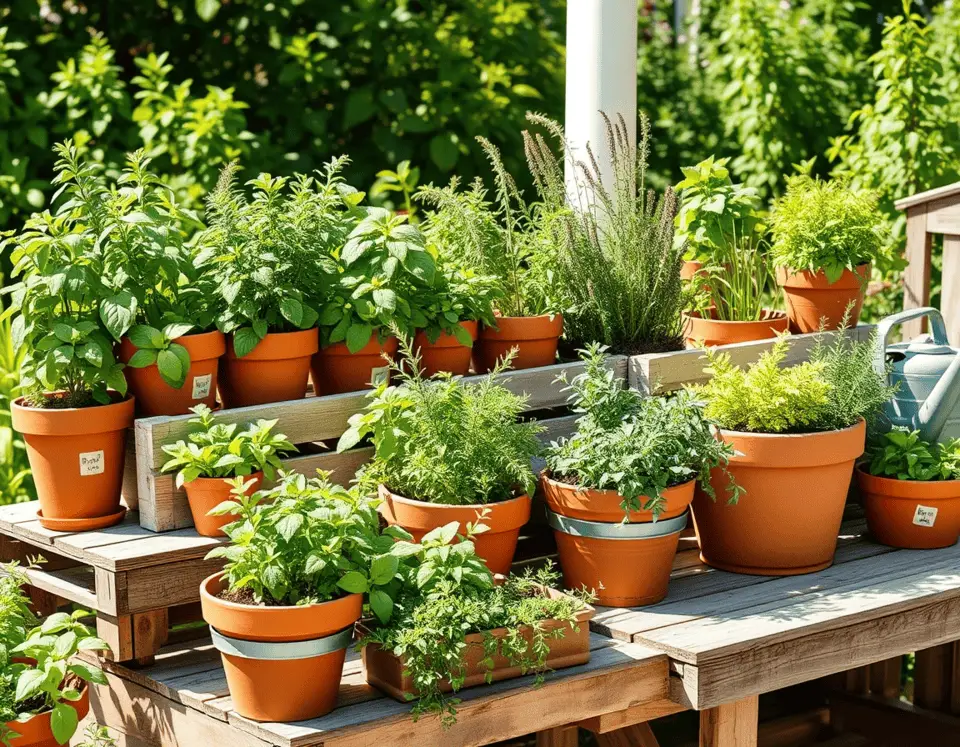
Isolating aggressive botanical species demands an unyielding spatial setup that separates their root systems from your primary garden soil entirely. If you are constructing standard in-ground beds or raised frames, you must dedicate those spaces strictly to non-invasive varieties using a loam-based soil blueprint where organic amendments never exceed 40 percent of total volume. Aggressive colonizers must be forced into completely separate, standalone containers or elevated planters to break their physical path to the open earth. It is strictly forbidden to plant mint, lemon balm, or pennyroyal directly into your premium raised vegetable frames, as they will choke out adjacent root crops within a single season.
Because true containment requires forced container gardening, your choice of substrate is absolutely critical for root health. You must explicitly use a loose, premium soilless potting mix for all container-bound aggressive herbs and strictly forbid the use of native topsoil or heavy field loam inside pots. Native dirt compacts radically inside a container, destroying drainage, trapping stagnant moisture, and triggering lethal root rot. A porous, professional soilless matrix ensures excellent aeration around dense root networks while safely confining the plant’s boundaries.
- Blend a soilless mix using 60 percent coconut coir, 30 percent perlite, and 10 percent compost.
- Establish standalone container zones located at least five feet away from open soil beds.
- Verify that every isolation container features a solid, uncompromised bottom structure.
3. Spacing and Planting Guidelines
Implementing an unyielding structural boundary is the only scientifically proven method to counteract the biological drive of invasive rhizomatous plants. Real-world testing logs from online planting communities reveal that a widespread myth suggests sinking a bottomless plastic bucket into the earth will contain aggressive mint runners. University extension data and actual physics completely debunk this folklore; rhizomes routinely dive deep beneath open-bottom barriers within two seasons, escaping into the surrounding yard. True ground containment requires a fully intact pot with drainage holes or a solid, deep-sunk root barrier measuring at least 24 inches in vertical depth.
When planting your isolation containers, space your aggressive starters with adequate clearance to manage their heavy lateral canopy growth. While seed germination rules vary wildly by family, you should treat cold stratification as a highly recommended practice to optimize uniform sprouting for woody perennials. Always separate your planting depths carefully based on seed dimensions to ensure proper emergence across your varieties.
- Use a solid plastic or thick glazed ceramic pot with a fully intact bottom.
- Provide a minimum structural clearance of 18 inches between distinct isolation pots.
- Bury large culinary seeds exactly one quarter inch deep for optimal early emergence.
- Surface-sow tiny, light-triggered seeds completely uncovered on the damp substrate.
4. Watering and Nutritional Protocols
Managing irrigation cycles inside isolation pots requires consistent observation to maintain intense essential oil profiles without drowning the roots. Because containers dry out significantly faster than traditional garden beds, you must monitor moisture levels deep within the substrate before applying water. Deliver irrigation directly to the soil level using a watering can or targeted drip line, keeping the upper foliage completely dry. Wetting the broad leaf canopy of dense, bushy herbs creates a humid microclimate that rapidly invites destructive powdery mildew outbreaks.
Avoid the temptation to apply heavy synthetic nitrogen fertilizers to your contained herbs to force rapid growth. High-nitrogen chemical feeding results in explosive, weak cellular expansion that drastically dilutes the concentration of aromatic volatile oils in the leaves, leaving your harvest virtually flavorless. Instead, side-dress the top of the pot with a thin half-inch layer of worm castings or aged compost once in early spring. Allow the top two inches of the soilless matrix to dry out completely between waterings to naturally stress the plant, forcing it to generate a more pungent, resinous flavor profile.
- Apply water strictly when a digital moisture meter indicates dry conditions at a four-inch depth.
- Feed exclusively with diluted, slow-release organic nutrients to protect flavor intensity.
- Position containers to receive a minimum of six to eight hours of direct daily sunlight.
5. Harvesting and Storage
Frequent, aggressive harvesting serves as your ultimate tactical pruning tool to control the canopy size and prevent invasive self-seeding cycles. Snip away the top growing tips regularly using sharp, sterilized bypass shears to stimulate compact, bushy lateral branching and completely halt the production of summer flowers. Allowing an aggressive herb like lemon balm to bloom is an agricultural disaster, as a single plant will disperse hundreds of seeds on the wind across your entire property. Never remove more than one-third of the total foliage mass during a single harvest session to prevent sending the root system into shock.
Before you begin any culinary preservation or processing methods in your kitchen, you must strictly follow proper food safety sanitation guidelines. You are explicitly commanded to thoroughly wash the fresh harvest under cold running water to remove soil particles, bird droppings, and insect debris. Dry the leaves completely using a salad spinner or clean paper towels to eliminate surface moisture, as packing wet leaves invites harmful soil-borne bacteria. An expert culinary processing method involves chopping the pristine leaves finely, packing them tightly into silicone trays, and submerging them in olive oil to create high-value, flash-frozen flavor cubes that store perfectly for eight months.
- Harvest individual sprigs early in the morning immediately after the dew evaporates.
- Sterilize your micro-tip pruning shears with isopropyl alcohol before and after clipping.
- Store dried, unwashed leaves inside airtight glass mason jars kept in a dark pantry.