What Herbs to Plant in August (and Why You’re Not Too Late)
Learning what herbs to plant in August gives you a major advantage by leveraging warm late-summer soil temperatures without the scorching heat waves of midsummer. This transitional planting window provides ideal conditions for rapid germination of cool-season annuals and deep root establishment for hardy perennials.
As daylight hours decline, many culinary greens produce higher concentrations of essential oils and resist premature bolting. Setting up your late-season herb garden properly requires understanding specific plant life cycles, proper soil mechanics, and accurate sowing depths.
Variety Selection and Core Differences
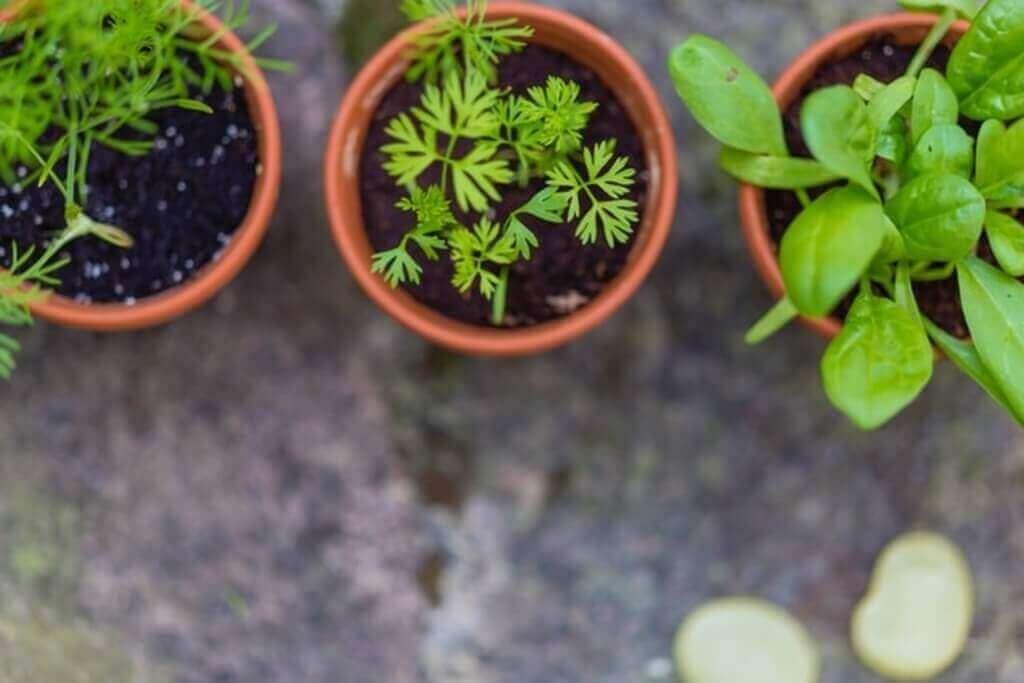
Cool-season annuals from the Apiaceae family flourish when seeded during the final weeks of summer. Cilantro, dill, parsley, and chervil thrive under shortening days and cooler autumn nights, producing tender leaves until hard frost.
Perennials like thyme, oregano, and chives utilize the warm August soil to build strong root architectures before winter dormancy. A persistent gardening myth claims that growing related herbs together alters their current foliage flavor through cross-pollination. Cross-pollination exclusively impacts the genetic traits and seeds of the next generation crop, never modifying the taste, aroma, or leaves of your current harvest.
When establishing invasive rhizomatous herbs such as spearmint or peppermint, physical containment is mandatory. Never rely on bottomless pots or open-bottom barriers, as aggressive rhizomes easily dive beneath open barriers within two seasons. True containment requires planting inside a fully intact pot with drainage holes or installing a solid, deep-sunk root barrier.
- Cilantro: Cool-season annual that thrives in dropping temperatures and resists bolting.
- Dill: Fast-maturing annual suited for late pickling harvests and delicate autumn fronds.
- Thyme: Woody perennial requiring early late-summer root establishment before freezing temperatures.
- Mint: Vigorous perennial demanding complete containment in closed-bottom vessels.
Advanced Late-Summer Herb Management
Data-backed strategies to bypass seasonal drops in sunlight and maximize autumn yields.
| Category | Late-Summer Challenge | Advanced Formula & Actionable Strategy | Unique Information Gain Value |
|---|---|---|---|
| ❄️ Frost Window | First Frost Countdown |
Sowing Date = [First Frost Date] – [Days to Maturity + 14 Days]
The added 14-day safety buffer dynamically factorizes the Autumn Slowdown Factor, correcting for shorter sun arcs in September and October.
|
Protects late investments by accounting for slower plant cell division as natural day length drops below 12 hours.
|
| 🪲 Pest Control | Late-Summer Aphid Surges |
Emulsify a raw 0.5% Neem oil solution bolstered with concentrated potassium silicate (2-3 mL/gal). Spray completely across leaf undersides exclusively at civil twilight.
|
Absorbed silica integrates into outer cell walls, forming a tough physical barrier that discourages piercing-sucking insect mouthparts.
|
| 🌱 Soil Mechanics | Subsurface Heat Flashes |
Distribute exactly 1 inch of finely shredded straw or pine-straw mulch across root zones. Retain a strict 0.5-inch open ring away from tender stem bases.
|
Lowers upper soil column temperature spikes by up to 8°F, keeping fine roots cool while preventing crown-rot moisture build-up.
|
| 🍄 Pathogen Defence | August Powdery Mildew |
Apply a fine preventative misting across your leaf canopy once a week using a strict 1:9 ratio of raw milk to fresh water under clear, sunny atmospheric conditions.
|
Sunlight reacts with milk proteins to produce antiseptic free radicals that safely destroy fungal spores on contact.
|
Location and Soil Setup
August planting requires strict attention to soil physical properties to prevent moisture loss and root suffocation. For container cultivation, use a loose, premium soilless potting mix containing peat moss, perlite, and coconut coir. You must strictly avoid native topsoil or heavy field loam in containers, as these pack tightly and cause anaerobic root rot.
For in-ground garden beds, create a loam-based blueprint that drains well while holding sufficient moisture. Ensure that compost and organic amendments never exceed 40 percent of total soil volume to prevent nutrient toxicity and bed settling.
- Soilless Container Blueprint: 50 percent peat moss or coco coir, 30 percent perlite, and 20 percent vermiculite.
- In-Ground Soil Blueprint: 60 percent native sandy loam blended with 40 percent mature compost.
- Target Soil Reaction: Maintain an overall pH balance between 6.2 and 6.8 for optimal nutrient uptake.
An effective backyard hack for late-summer sowing involves laying damp burlap sacking over freshly seeded soil for three days. This simple cover drops the soil surface temperature significantly, protecting cool-season seeds from drying out before emergence.
Spacing and Planting Guidelines
Proper seed depth differentiation dictates the success of late-summer germination. Never apply a generic blanket planting depth across different herb varieties.
Large seeds like cilantro and parsley require a true quarter-inch soil burial to stay moist and dark during germination. In contrast, small, light-triggered seeds such as chamomile or late basil crops must be surface-sown completely uncovered and gently pressed into the substrate.
- Cilantro and Dill: Sow seeds 0.25 inches deep, spaced 2 inches apart, thinning to 6 inches.
- Parsley: Soak seeds for 12 hours, sow 0.25 inches deep, and space plants 8 inches apart.
- Light-Dependent Seeds: Surface-press onto damp soil without covering and mist gently.
- Perennial Transplants: Space root balls 12 to 18 inches apart to allow sufficient airflow.
Watering and Nutritional Protocols
Late August sunshine evaporates surface moisture quickly, making moisture control critical for young seedlings. Water your herb beds in the early morning using gentle drip irrigation or a fine-spray wand.
Avoid excessive overhead watering during hot afternoons, which scalds tender foliage and promotes fungal pathogens like powdery mildew. Keep the top inch of soil consistently damp until seeds sprout, then transition to deep, less frequent soakings.
Limit heavy nitrogen fertilizers during late summer. Rapid, succulent growth triggered by excess nitrogen remains soft and suffers severe cell damage during the first autumn frosts. Use a balanced, half-strength organic liquid seaweed or fish emulsion once every three weeks to encourage cellular strength.
Harvesting and Storage
Collect your culinary herbs in the early morning immediately after the dew evaporates but before the afternoon sun volatilizes their aromatic essential oils. Never strip more than one-third of the foliage at a single time to preserve plant health.
For safe culinary preservation, thoroughly wash the fresh harvest under cold running water. Dry the leaves completely with a salad spinner or clean paper towels to eliminate soil-borne bacteria before packing or storing.
- Salad Spinner Processing: Spin washed stems twice to remove all clinging droplets.
- Compound Herb Butter Method: Fold finely minced leaves into softened grass-fed butter, roll into parchment logs, and freeze for winter cooking.
- Flash Freeze Protocol: Strip dry leaves onto a baking sheet, freeze for two hours, and transfer into airtight glass jars.