Herbs That Don’t Grow Well Together: Complete Guide
Understanding the biological requirements of herbs that do not grow well together is the ultimate secret to preventing sudden crop failure in your garden. Forcing incompatible botanicals to share the same root zone creates severe nutrient competition, light deprivation, and irreversible fungal infections.
Strategic companion planting optimizes natural defenses and maximizes foliage development throughout the growing season. By identifying biochemical antagonisms and moisture disparities, you can build a highly productive, resilient herbal ecosystem.
Variety Selection and Core Differences
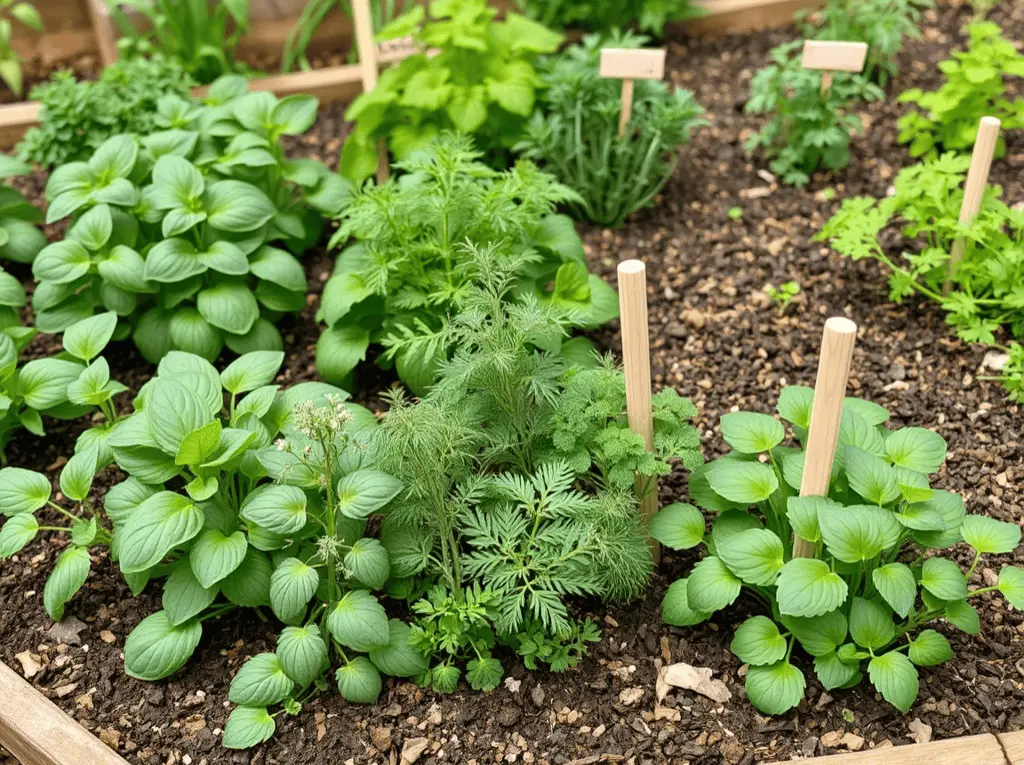
Plant families dictate physiological compatibility in shared beds. Grouping Mediterranean perennials like rosemary and thyme with moisture-loving annuals like basil always leads to root rot and crop death.
The Umbelliferae family demands strict isolation from sensitive garden neighbors. Fennel is notoriously allelopathic, exuding chemical compounds from its root system that stunt the metabolic growth of dill, cilantro, and bush beans.
A persistent gardening myth claims that cross-pollination between related herbs ruins the culinary flavor and aroma of your current season leaves. Scientific consensus confirms cross-pollination exclusively impacts the genetic traits and seed viability of the next generation crop.
- Rosemary and Thyme: Woody Mediterranean perennials requiring dry, lean, well-drained conditions.
- Basil and Cilantro: Soft-stemmed annuals requiring constant moisture and rich nitrogen reserves.
- Mint: Aggressive, spreading perennial driven by rapid subterranean rhizomes.
- Fennel: Solitary allelopathic botanical incompatible with nearly all standard culinary crops.
Location and Soil Setup
Matching soil composition to specific botanical demands prevents chronic root stress. Mediterranean herbs thrive in mineral-dense soils with low organic content, whereas soft annual greens demand rich organic substrates.
For container gardening, you must use a loose, premium soilless potting mix and strictly avoid native topsoil or dense outdoor loam. For in-ground raised beds, adopt a sandy loam blueprint where rich compost amendments never exceed 40 percent of the total soil volume to prevent moisture saturation.
Invasive rhizomatous herbs like spearmint and peppermint must never share open bed space with shallow-rooted companions. A common backyard myth suggests sinking bottomless pots into raised beds to contain mint spread. Rhizomes easily dive beneath open barriers within two seasons, meaning true containment requires a fully intact pot with drainage holes or a solid, deep-sunk root barrier.
- Container Blend: 50 percent peat moss or coco coir, 30 percent perlite, 20 percent coarse horticultural sand.
- In-Ground Blend: 60 percent native sandy loam, 30 percent aged compost, 10 percent expanded shale.
- Mint Isolation Pot: 12-inch minimum depth, solid plastic or glazed ceramic walls, unobstructed base drainage holes.
Spacing and Planting Guidelines
Correct plant spacing prevents stagnant microclimates that foster powdery mildew and bacterial leaf spot. Dense herb canopies trap ambient humidity, which rapidly destroys dry-climate species like lavender and sage.
Seed-sowing protocols must be adjusted based on seed size and germination mechanics. Never use a generic planting depth across different herbal species.
Large seeds like cilantro require a true quarter-inch soil burial to ensure proper seed-to-soil contact and complete darkness. Conversely, tiny light-triggered seeds such as chamomile and basil must be surface-sown completely uncovered and gently pressed into the moist medium.
- Mediterranean Herb Spacing: 18 to 24 inches between individual crowns to maximize continuous airflow.
- Moisture-Loving Annual Spacing: 10 to 12 inches apart in staggered offset rows.
- Deep-Sunk Root Barrier Depth: 18 inches vertical depth into the subsoil with a two-inch above-ground lip.
Watering and Nutritional Protocols
Irrigation frequency is the primary dividing line between herbal plant communities. Grouping drought-tolerant perennials with water-dependent annuals forces the grower into an impossible moisture compromise.
Culinary annuals demand uniform moisture, while woody perennials require an oxidative dry-back cycle between watering sessions. Over-fertilizing Mediterranean herbs with high-nitrogen synthetic feeds causes rapid, weak growth that severely dilutes essential oil concentrations.
Try the terracotta reservoir hack to keep moisture-loving herbs hydrated while keeping neighboring dry zones completely safe. Bury an unglazed clay olla in the center of your annual herb cluster to deliver targeted subsurface hydration without saturating adjacent dry zones.
- Mediterranean Watering Protocol: Deep hydration every 10 to 14 days, allowing the top three inches of soil to dry completely.
- Annual Herb Watering Protocol: Consistent hydration delivering one inch of water per week.
- Nitrogen Feed Ratio for Annuals: 3-1-2 liquid organic emulsion applied bi-weekly at half strength.
Harvesting and Storage
Harvesting herbs at the correct biological stage preserves peak essential oil concentrations. Harvest soft-stemmed herbs in the early morning immediately after the dew evaporates but before intense midday sun degrades volatile terpenes.
Never cut more than one-third of the total foliage mass at a single time to prevent physiological shock. Removing flowering seed heads on annual herbs redirects biological energy back into vegetative leaf production.
Before preserving culinary herbs, you must thoroughly wash the fresh harvest under cold running water. Dry the leaves completely with a salad spinner or clean paper towels to eliminate soil-borne bacteria before storage.
- Herb Ice Cube Hack: Finely chop tender leaves, pack into silicone trays, submerge in extra-virgin olive oil, and freeze at zero degrees.
- Dehydration Blueprint: Hang woody perennial bundles upside down in a dark room with 45 percent relative humidity for 14 days.
- Fresh Preservation Storage: Trim soft herb stems and place upright in two inches of clean water inside the refrigerator.