What Herbs Can You Plant Together? Easy Pairing Tips!
Learning what herbs can you plant together is the single most critical foundation for designing a productive, disease-free kitchen garden. Novice gardeners often group random herbs into one raised bed, which quickly leads to root rot, nutrient battles, and rampant pest infestations.
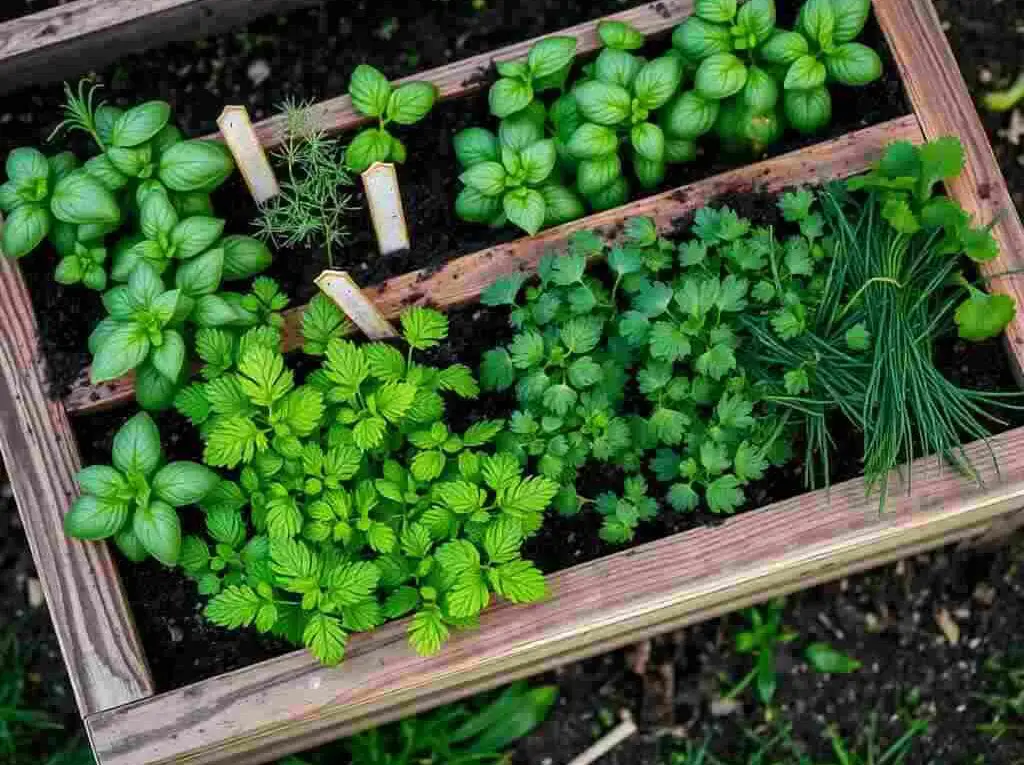
Strategic companion grouping matches species with identical hydration, sunlight, and soil chemistry requirements. Grouping compatible cultivars creates a resilient microclimate that naturally elevates essential oil concentrations and deters garden pests.
Variety Selection and Core Differences
The most prevalent myth in companion gardening is that all culinary herbs share identical environmental requirements. In botanical reality, you must divide your crops into two physiological classes: moisture-demanding annuals and drought-tolerant Mediterranean perennials.
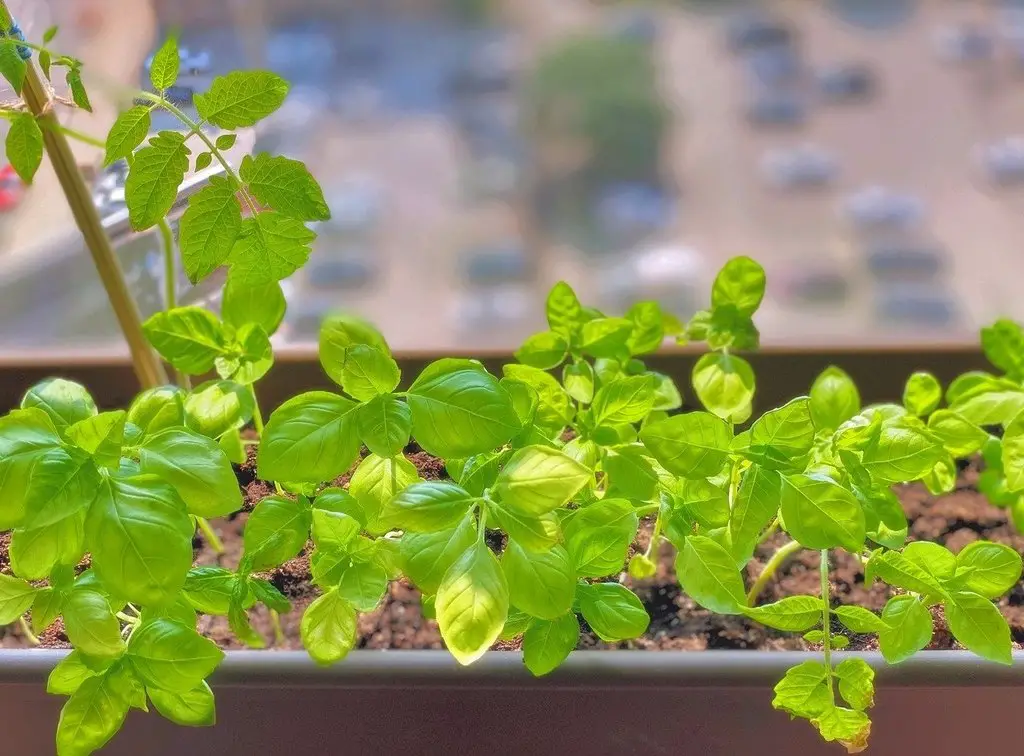
Mixing water-loving annuals like basil with drought-tolerant perennials like rosemary in identical soil inevitably suffocates the arid root systems. Creating separate microclimates is the only way to ensure both plant families thrive simultaneously.
Aggressive rhizomatous species present a severe physical threat to neighboring root structures. Planting mint inside bottomless containers or open-bottom root barriers fails because vigorous rhizomes easily dive beneath open barriers within two seasons. True mint containment requires a fully intact pot with drainage holes set completely outside shared beds.
Gardeners also fear planting related Umbelliferae family members like dill, fennel, and cilantro together due to cross-pollination folklore. Cross-pollination exclusively impacts the genetic traits and seeds of the subsequent generation. It never alters the flavor, aroma, or leaf morphology of the current season.
Group herbs according to these biological compatibility classifications:
- Moisture Class: Sweet basil, flat-leaf parsley, chervil, and cilantro
- Mediterranean Arid Class: Rosemary, garden sage, common thyme, and winter savory
- Semi-Moist Class: French tarragon, standard oregano, and sweet marjoram
- Isolated Container Class: Spearmint, peppermint, and aggressive lemon balm
Location and Soil Setup
Successful herb compatibility begins with selecting the correct growing medium tailored to your specific garden framework. If you cultivate herbs in containers, you must use a loose, premium soilless potting mix and strictly forbid native topsoil or dense outdoor loam. Soilless media preserve structural porosity and prevent waterborne fungal pathogens from suffocating root networks.
For in-ground installations, construct a balanced loam blueprint that guarantees sharp drainage while holding vital micronutrients. Decomposing organic matter can burn delicate feeder roots if oversupplied, meaning total organic amendments must never exceed 40 percent of total bed volume.
Ensure your planting site receives six to eight hours of direct daily sunlight for maximum oil synthesis. Position taller perennial herbs to the north so they do not cast heavy shade over low-growing companion greens.
Apply this exact in-ground soil conditioning blueprint:
- Native loam base: 60 percent of total bed volume
- Screened organic compost: 25 percent of total volume
- Coarse horticultural pumice or perlite: 15 percent of total volume
- Target pH for Mediterranean herbs: 6.5 to 7.5
- Target pH for moisture-loving herbs: 6.0 to 6.8
Spacing and Planting Guidelines
Seed sowing depth directly dictates early germination success and root anchor strength. Never apply a generic blanket planting depth across diverse culinary herbs.
Large seeds like cilantro demand a true quarter-inch soil burial to maintain optimal moisture during germination. Conversely, tiny light-triggered seeds such as sweet basil and German chamomile must be surface-sown completely uncovered and lightly pressed into damp soil.
Proper plant spacing preserves continuous horizontal airflow throughout the foliage canopy. Adequate spacing drastically reduces humidity pockets that cause powdery mildew, botrytis blight, and bacterial leaf spot.
Follow these structural spacing guidelines across companion beds:
- Cilantro and flat-leaf parsley: Space 6 to 8 inches apart with 0.25-inch seed depth
- Sweet basil: Space 10 to 12 inches apart with surface-sown seed placement
- Rosemary and garden sage: Space 24 to 36 inches apart in dedicated arid zones
- Creeping thyme: Space 8 to 12 inches apart as a living ground cover
An unorthodox backyard hack involves sinking unglazed clay ollas directly between moisture-loving companion zones. Sunk beneath the surface, these porous vessels release water directly to root systems via soil moisture tension, completely preventing wet foliage and suppressing fungal spore germination.
Watering and Nutritional Protocols
Irrigation protocols must be strictly isolated according to companion groupings. Moisture-loving herb pairings require the upper inch of soil to remain consistently damp. Mediterranean groupings require root zones to dry out completely between deep, thorough soakings.
Nutrient management demands extreme restraint across all culinary herb varieties. Heavy applications of high-nitrogen synthetic fertilizers force rapid, watery vegetative growth that dilutes volatile essential oils and weakens natural pest resistance.
Feed moisture-loving annuals with a half-strength organic fish emulsion once every four weeks during active vegetative growth. Mediterranean perennials thrive in lean soil and require only a light spring top-dressing of aged compost with no supplemental chemical fertilization.
Harvesting and Storage
Timing your harvest maximizes the concentration of volatile aromatic oils in herb foliage. Harvest leafy companions early in the morning right after dew evaporates but before midday sun degrades delicate terpenes.
Never harvest more than one-third of a perennial plant canopy at a single time. Pruning just above an active leaf node encourages dense lateral branching and prevents woody senescence.
Food safety sanitation is paramount when processing fresh cuttings. Thoroughly wash the fresh harvest under cold running water and dry the leaves completely with a salad spinner or paper towels to eliminate soil-borne bacteria before storage.
Store tender leafy herbs like parsley and cilantro upright with stems submerged in clean water inside the refrigerator. Preserve woody Mediterranean herbs by flash-freezing whole clean sprigs on flat parchment sheets before transferring them into airtight silicone storage pouches.