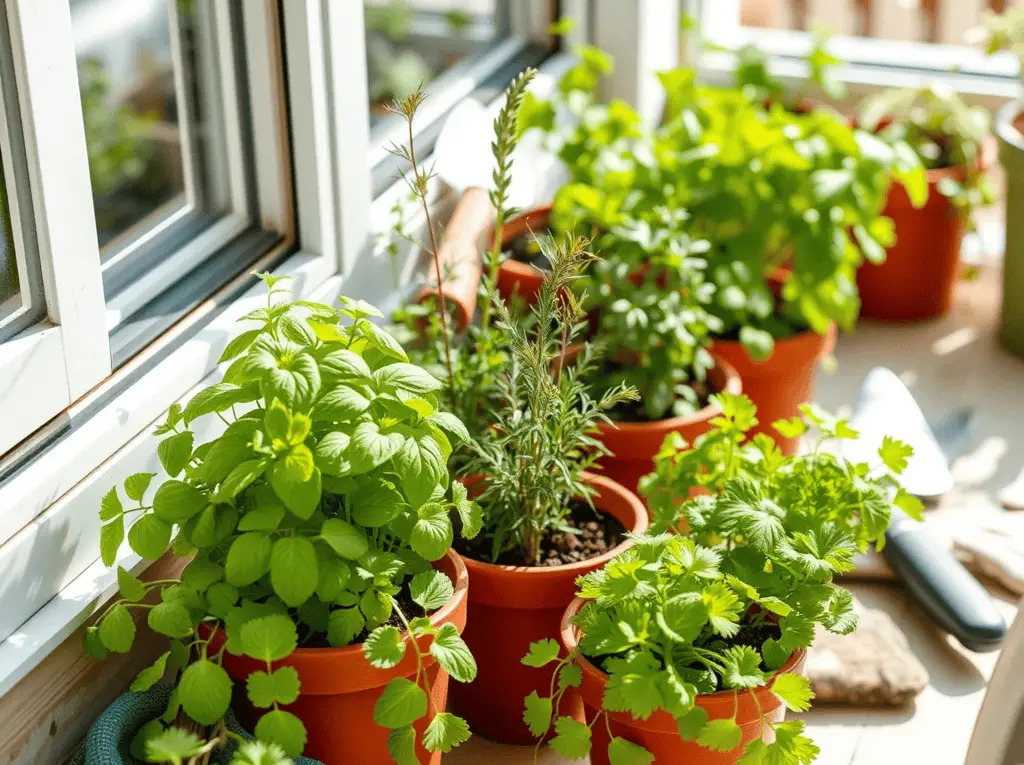
DIY Herb Garden for Beginners: No Nonsense Guide
Planning and installing a productive DIY herb garden transforms your culinary habits by providing instant access to potent, fresh aromatic leaves. Cultivating your own botanical seasonings eliminates reliance on oxidized grocery store plastics while elevating everyday home cooking.
Whether you are managing sunny windowsills or developing backyard beds, mastering foundational horticultural practices guarantees continuous seasonal yields. A disciplined approach to structural soil design, precise irrigation, and strategic canopy management creates a resilient system that thrives year after year.
Variety Selection and Core Differences
Successful herb production begins with understanding the distinct botanical lifecycles of annuals, biennials, and woody perennials. Annuals like sweet basil complete their lifecycle within a single warm growing season, while woody perennials like rosemary and thyme produce harvests across multiple years. Biennials like flat-leaf parsley dedicate their first year to lush vegetative leaf growth before flowering in their second season.
A pervasive gardening myth claims that growing closely related species from the Umbelliferae family in close proximity ruins leaf flavor through cross-pollination. In botanical reality, cross-pollination strictly dictates the genetic traits of subsequent seed generations and never alters the flavor, aroma, or chemical profile of current season leaves. You can safely cultivate dill, cilantro, and parsley in adjacent plots without degrading their distinct culinary traits.
Aggressive rhizomatous herbs require strict physical containment to prevent them from invading nearby growing zones. Never rely on bottomless pots or shallow open-bottom barriers for species in the mint family, as vigorous rhizomes dive deep beneath open barriers within two seasons. True containment requires planting mint into a fully intact container with drainage holes or sinking an impenetrable solid root barrier deep into the earth.
- Sweet basil: Fast-growing tender annual that requires frequent node pinching to suppress floral spikes.
- Flat-leaf parsley: Cold-tolerant biennial featuring deep taproots and high mineral concentrations.
- Spearmint: Invasive perennial that must remain strictly isolated inside an intact container with drainage holes.
- English thyme: Low-growing woody perennial adapted to dry conditions and low-fertility substrates.
- Common chives: Cold-hardy clumping perennial delivering subtle allium foliage throughout the growing season.
Location and Soil Setup
Culinary herbs require at least six continuous hours of direct sunlight daily to synthesize concentrated essential oils and terpenes. South-facing exposures deliver optimal light energy for indoor setups, while east-facing spaces supply gentle morning sun without the scorching heat of late afternoon glass. Supplemental full-spectrum grow lights can bridge illumination gaps during dark winter months.
Substrate physics differ dramatically between containers and open garden beds. When growing herbs in containers, you must use a loose, premium soilless potting mix and strictly avoid heavy native topsoil or loam that suffocates roots. For in-ground beds, construct a loam-based blueprint where organic amendments never exceed 40 percent of total soil volume.
Many growers mistakenly add a layer of gravel or stones to the base of containers under the belief that it aids drainage. This practice creates an artificial perched water table that lifts standing moisture directly into the root zone, causing root rot. Maintain uniform potting mix from the surface all the way down to the base drainage holes.
- Base substrate: 2 parts shredded coconut coir or peat moss for structural water retention.
- Aeration component: 1 part coarse horticultural perlite to maximize root zone oxygen exchange.
- Nutrient buffer: 1 part screened worm castings to supply steady, gentle biological nutrients.
Spacing and Planting Guidelines
Sowing depth must align precisely with seed morphology rather than applying a single generic depth across all species. Large seeds like cilantro require a true quarter-inch soil burial to maintain optimal darkness and moisture during germination. Conversely, tiny light-triggered seeds such as chamomile and basil must be surface-sown completely uncovered and gently pressed onto moist substrate to receive light triggers.
Adequate physical spacing between mature stems suppresses foliar pathogens like powdery mildew and gray mold. Dense foliage creates microclimates of stagnant humidity that encourage fungal spores to germinate on leaf surfaces. Providing open physical clearance around each plant facilitates continuous airflow through the lower canopy.
Thinning seedlings early prevents resource competition and root entanglement. Remove weaker seedlings using sterile shears rather than pulling them by hand to prevent damaging the fragile root zones of neighboring plants.
- Cilantro seed placement: Sow seeds 0.25 inches deep with 3 inches of final spacing between plants.
- Sweet basil sowing: Surface-sow seeds completely uncovered and thin mature plants to 10 inches apart.
- Rosemary layout: Space mature transplants 18 inches apart to facilitate uniform air circulation.
- Broadleaf sage spacing: Provide 14 inches of radial clearance to avoid dense leaf crowding.
Watering and Nutritional Protocols
Herbs thrive when irrigation cycles mirror their natural native habitats. Woody Mediterranean herbs prefer a distinct wet-to-dry cycle, requiring the top 2 inches of soil to dry out before receiving a deep soaking. Tender-leaf annuals like basil and chervil prefer steady, moderate moisture levels without ever sitting in waterlogged mud.
An unorthodox backyard hack for steady moisture delivery is installing a buried terracotta olla in the center of your herb bed. This unglazed clay vessel slowly seeps moisture outward through its micro-porous walls directly into the surrounding soil via capillary action. This method reduces evaporative moisture loss while keeping surface leaves completely dry to inhibit foliar disease.
Over-fertilizing herbs with high-nitrogen fertilizers produces weak, watery foliage with severely diluted essential oil concentrations. Rely on gentle organic feedings that provide slow-release minerals without forcing unnaturally rapid cellular elongation.
- Irrigation timing: Water deeply at the soil level until liquid runs freely from container drainage holes.
- Terracotta olla hydration: Fill subterranean clay reservoirs weekly to deliver steady moisture to deep root systems.
- Nutrient application: Supply liquid kelp extract at half-strength once every four weeks during active growth.
Harvesting and Storage
Harvesting herbs correctly stimulates active lateral growth and multiplies your total seasonal yield. Never remove more than one-third of a plant’s total green foliage during a single harvesting session to prevent physiological shock. Make clean cuts just above a set of leaf nodes using sharp, sanitized shears to force the plant to produce two new growing shoots.
Gather your harvest during the cool morning hours after the morning dew has dried but before intense midday heat volatilizes the delicate aromatic terpenes. Freshly cut stems begin losing volatile compounds rapidly once exposed to high ambient temperatures.
Food safety sanitation is essential when handling homegrown culinary greens. Thoroughly wash the fresh harvest under cold running water and dry the leaves completely with a salad spinner or paper towels to eliminate soil-borne bacteria before packing or storing. Storing damp leaves promotes rapid bacterial breakdown and mold development inside storage containers.
For long-term storage of tender herbs, chop cleaned leaves and pack them into silicone ice cube trays covered with extra virgin olive oil before freezing. The oil forms a protective barrier that prevents freezer burn and stops enzymatic browning, preserving fresh herbal flavors for winter soups and sauces.
- Harvesting threshold: Restrict harvests to a maximum of 30 percent of total leaf canopy at one time.
- Node pruning: Slice stems 0.125 inches above a node to stimulate immediate lateral branching.
- Sanitation protocol: Wash thoroughly and dry leaves completely with a salad spinner prior to cold storage.
- Freezing method: Submerge finely chopped herbs in olive oil within silicone molds for long-term preservation.