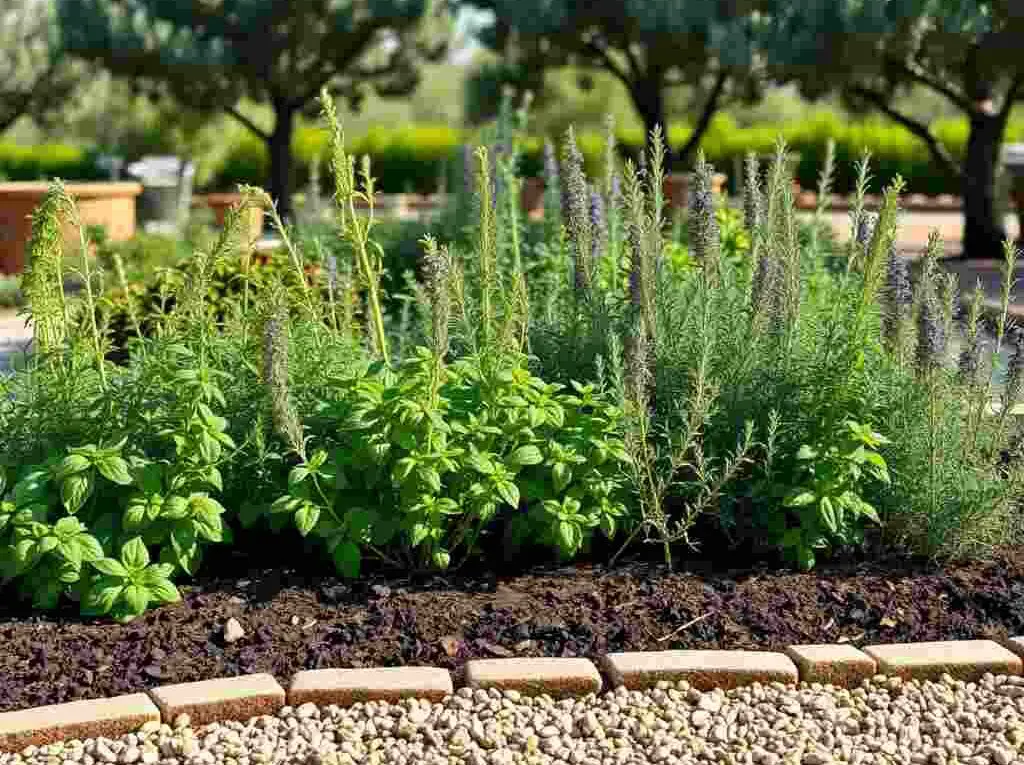
Mediterranean Herbs to Plant Together: Best Herb Combos!
Selecting the right Mediterranean herbs to plant together creates an aromatic, low-maintenance garden ecosystem that naturally maximizes essential oil production. Grouping species with compatible sunlight and moisture profiles protects delicate roots from moisture stress while deterring destructive garden pests.
Understanding botanical relationships prevents costly cultivation errors and promotes balanced growth across the entire bed. When you pair complementary varieties, your garden thrives with minimal human intervention.
Variety Selection and Core Differences
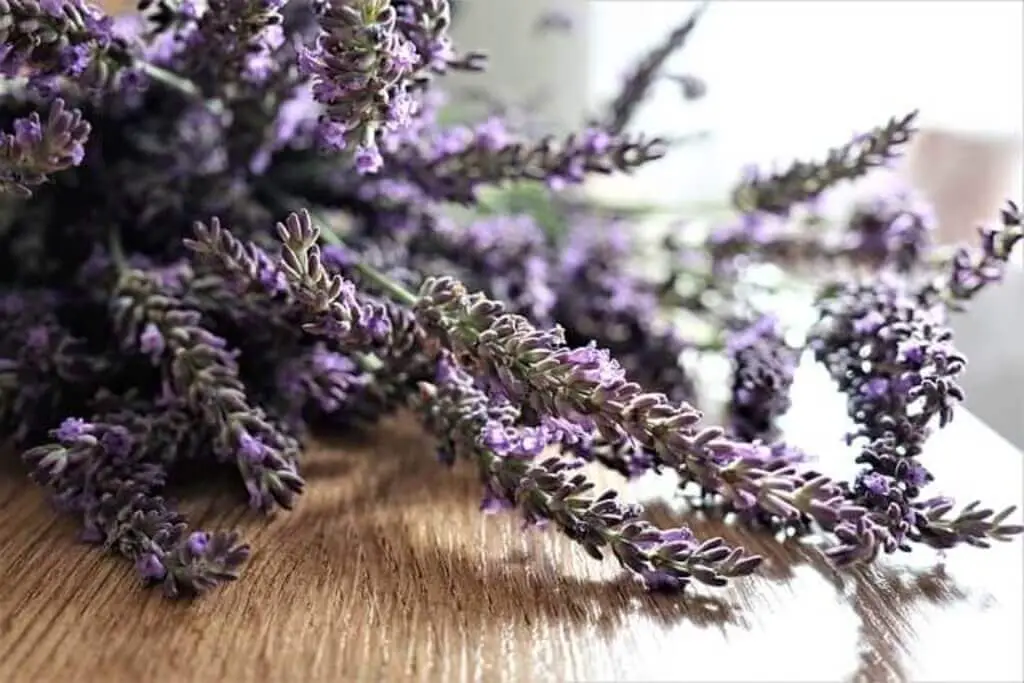
Woody Mediterranean perennials like rosemary, culinary sage, English lavender, winter savory, Greek oregano, and creeping thyme share identical evolutionary adaptations. They feature narrow, resinous, or pubescent foliage designed to minimize water loss and endure intense thermal radiation.
Soft-stemmed annuals or tender perennials like sweet basil, sweet marjoram, and Italian flat-leaf parsley require slightly richer substrates and more frequent hydration. Planting these tender greens adjacent to dense, moisture-sensitive shrubs like lavender often leads to fungal blight or compromised vigor.
- Rosemary provides vertical architectural height and produces resinous pinene compounds that deter leafhoppers.
- Culinary sage acts as an anchoring shrub that releases camphor compounds to discourage brassica pests.
- Common thyme functions as a living groundcover that shades the soil surface to suppress weed seed germination.
- Greek oregano rapidly carpets open soil and attracts predatory beneficial insects with its late-summer blooms.
Aggressive spreading species like spearmint and peppermint must never be planted directly alongside clumping Mediterranean herbs. Inexperienced growers often attempt using bottomless containers in garden beds, but mint rhizomes easily dive beneath open barriers within two seasons. True containment requires a fully intact pot with drainage holes or a solid, deep-sunk root barrier.
A persistent myth suggests that cross-pollination between related herbs grown in close proximity will ruin the flavor of the current season’s foliage. Cross-pollination exclusively impacts the genetic traits and seeds of the next generation’s crop, leaving current leaf flavors and volatile terpene profiles completely unaffected.
Location and Soil Setup
All true Mediterranean herbs require at least six to eight hours of direct, unfiltered solar exposure daily. Dense canopy shade stalls metabolic transpiration, reducing the concentration of flavorful essential oils and creating conditions favorable to powdery mildew.
For container gardening, you must use a loose, premium soilless potting mix and strictly avoid native topsoil or dense field loam. Containerized native soil compacts rapidly, suffocating root structures and trapping standing water.
When planting in-ground beds, install a loam-based blueprint where organic amendments never exceed 40 percent of total volume. High concentrations of decomposing organic matter hold excessive moisture and encourage lethal root rot pathogens like Phytophthora.
- 50 percent native sandy loam
- 30 percent coarse horticultural pumice, perlite, or crushed granite grit
- 20 percent screened, well-aerated organic compost
An effective unorthodox backyard hack involves top-dressing your planting bed with a two-inch layer of crushed oyster shells or pale pea gravel. This mineral mulch reflects thermal radiation into the lower canopy while preventing splash-back fungal spores during heavy rainstorms.
Spacing and Planting Guidelines
Proper spacing ensures adequate air circulation around woody stems, preventing stagnant microclimates that foster Botrytis gray mold. Overcrowding woody herbs restricts root expansion and forces individual plants to compete for scarce micronutrients.
- Rosemary requires 24 to 36 inches of lateral clearance for mature growth.
- Culinary sage demands 18 to 24 inches of dedicated spacing.
- Lavender varieties need 24 to 30 inches of room to maintain dry, healthy crowns.
- Low-growing thyme and oregano require 12 to 18 inches of clearance to form dense ground carpets.
Seed sowing depth must be customized according to seed biology rather than generalized across all species. Large seeds like coriander and cilantro require a true quarter-inch soil burial to ensure steady moisture absorption during germination. Small, light-triggered seeds like sweet basil, chamomile, and oregano must be surface-sown completely uncovered and gently pressed onto damp substrate.
Watering and Nutritional Protocols
Mediterranean herbs evolved in dry, rocky soils and perform best under lean nutritional conditions. Excessive nitrogen fertilization triggers rapid, weak vegetative growth that dilutes aromatic volatile oils and increases vulnerability to sap-sucking aphids.
Provide an initial light dressing of balanced compost during early spring emergence. Avoid applying high-potency synthetic fertilizers throughout the active growing season to preserve robust oil potency.
Apply water deeply but infrequently, allowing the top two inches of the root zone to dry out entirely between applications. Morning irrigation allows accidental leaf moisture to evaporate before midday heat, preventing foliage scorching and fungal colonization.
Harvesting and Storage
Harvest culinary herbs during the early morning hours once the morning dew has dried but before the midday sun vaporizes volatile terpenes. Never remove more than one-third of the total foliage mass at a single time to prevent physiological shock.
- Use razor-sharp, sanitized bypass pruning shears rather than dull scissors or hand-pinching methods.
- Make clean angled cuts directly above an active leaf node to encourage bushier lateral branching.
- Discontinue heavy canopy pruning roughly six weeks prior to your first autumn frost to prevent winter dieback.
Always adhere to strict food safety sanitation by thoroughly washing the fresh harvest under cold running water. Dry the leaves completely with a salad spinner or clean paper towels to eliminate soil-borne bacteria before packing or storing.
For optimal culinary preservation, strip cleaned leaves, pack them tightly into flexible silicone freezing trays, and completely submerge them in extra virgin olive oil. Freeze the trays solid to create convenient, portioned flavor blocks that lock in delicate culinary aromatics for up to twelve months.